Is online microblading training accepted in Australia? Bet that’s a question that’s been popping up while you’re scrolling through videos on cosmetic tattooing and wondering how to break into the beauty industry? You’re definitely not alone – I’m Olha Po, a Melbourne cosmetic tattooist specialising in eyebrow microblading, permanent makeup, and cosmetic tattoo procedures since 2016 at Face Figurati.
So, here’s your straight-up answer: online learning alone isn’t sufficient microblading training in Australia, even if the course has multiple in-depth online levels. Can definitely be part of your learning journey when you pair it up with recognised face-to-face training and get the infection control standards sorted.
Let’s break down what that really means in the real world of semi-permanent makeup, eyebrow embroidery, and feather-stroke brows.
Why Theory-Only Courses Fall Short in Australia
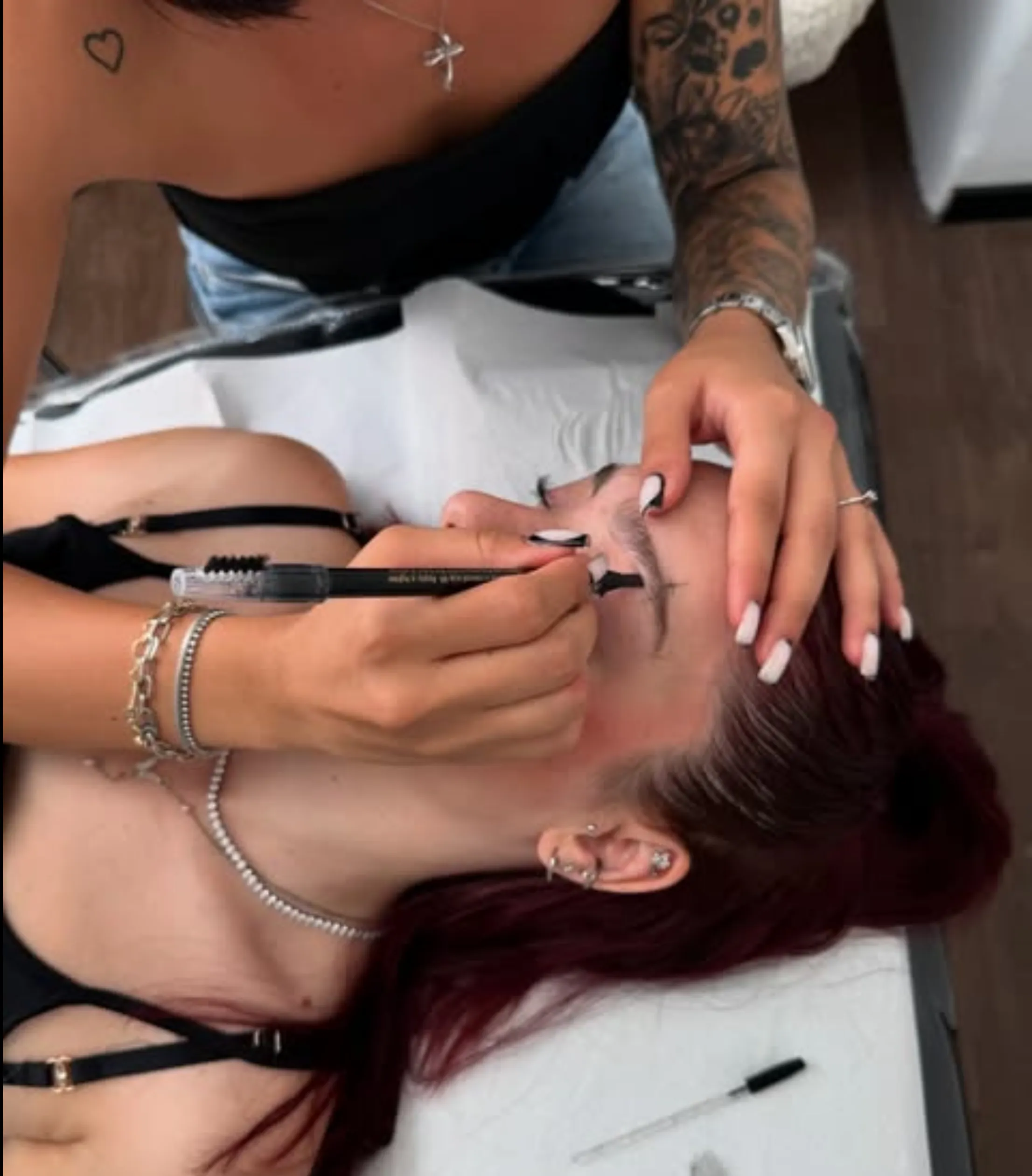
Back in the day, online learning was a great way to study skin anatomy, colour theory, brow shaping, and microblading techniques without the pressure. You could always go back and re-read your training manual, have a go at mapping out a brow with some pigments, and even get to grips with a latex needle in a latex hand until your hand no longer feels like it was going to spontaneously combust like your first day on a job in a tattoo parlour.
The problem is, though, in Australia, the microblading procedure is just like cosmetic tattoo therapy or an eyebrow tattoo from a tattoo artist. HLTINF005 Maintain Infection Prevention For Skin Penetration Treatments – you can’t just tick an online box for that one.
That unit, by the way? Has got to be done in-person through a registered training organisation – can’t be done online, no matter how shiny the module looks.
And let’s not forget you also need to get your hands dirty on live models because, no matter how good the online module looks, it’s just not the same as putting it all into practice yourself.
So, the real rule of thumb is:
- Online is great for theory
- In-person is where it’s at for hands-on + makes you compliant with the law
Even the Institute of Ink and other industry leaders will tell you the same thing.
What You Need Before Working on Clients

Before investing in microblading tools or semi-permanent makeup pigments, here’s what’s actually required for professional recognition in Australia.
The Three Components You Need:
| Requirement | Mandatory | Delivered Online? | Notes |
|---|---|---|---|
| Infection Control Certification (HLTINF005 or updated equivalent) | ✔ Yes | ✖ No | Must include an in-person practical assessment |
| Hands-On Microblading Practical Training | ✔ Yes | ✖ No | Must demonstrate correct depth, stretch, pressure, and hygiene |
| Theory Training (colour science, mapping, skin types, healing) | ✔ Yes | ✔ Yes | Online accepted |
Whether you’re planning to offer an eyebrow tattoo, delicate feather-stroke brows or any other type of cosmetic tattoo work, you’ll need to show you’ve got a solid handle on infection control, client consultations and safe technique.
Insurance companies will be keeping a close eye on all this – they conduct thorough checks.
What Happens If You Only Do Online Training?

It’s the part that most beginners don’t hear about until it’s too late.
Insurance providers will want to see:
- Proof that you’ve done some face-to-face training
- Proof of having completed the HLTINF005 certification
- Proof that you’ve put in the hours practising on live models with supervision
Without that, you’ll be unable to get insured for cosmetic tattooing or microblading work. And without insurance, you won’t be able to offer these services in the first place. Melbourne councils will also want to see this paperwork before they’ll let you open up a beauty space, whether that’s your own studio or a room in a salon.
I’ve met artists who paid for online training courses and loads of online practice, and earned certificates – only to find out, too late, that those certificates were essentially worthless without proper hands-on training. It’s hard to hear.
How Australia Views Theory-Based Training
Some online educators go around saying they’re “government approved” – but the cold, hard truth is: in Australia, there isn’t any such thing as a government-approved microblading course.
Anything else that gets thrown at you is through the industry.
What really matters is:
- Whether your trainer has years of experience in the field
- Whether you get to put in supervised practice on real people
- Whether you can demonstrate that you’ve got a safe and effective technique down
- Whether you can meet the requirements of the councils and insurance companies
Online training can be useful to fill in gaps in your knowledge, give you a confidence boost and help you get a better understanding of the theory side of things before you step into the classroom – but in Australia, it’s not something you can rely on by itself.
Why Practical Training Matters More Than You Think
When I’m working with students at Face Figurati, I can tell straight away whether someone has been trained purely online or has real hands-on experience.
The online-only students often hold their microblading tools the wrong way, struggle to get the hang of stretch and depth, mess up pressure across different skin types, get all panicked when the skin starts bleeding or swelling, and forget to follow proper client consultation protocols when things get real.
Skin behaves differently on everyone, and if you’re working in Melbourne, you’ve got to be prepared for the way the climate can affect skin hydration and elasticity.
I once trained an artist who had memorised her training manual from cover to cover, had perfected her technique on fake skin and thought she was a pro. But as soon as she started working on a real client who experienced some pain and started moving, she fell over completely. It’s just one of those things that can’t be simulated online.
What Proper Face-to-Face Training Should Include
When you step foot into one of our reputable training studios (Face Figurati – yeah, we’re biased), your trainer should paint a clear picture – not just hand you a piece of paper to stick on the wall.
Here’s what that should actually entail:
- Skin Anatomy + Skin Type Behaviour
How different conditions affect how well the skin holds pigment, how colours settle, and how quickly they heal. - Pigment Knowledge + Colour Theory
Understanding undertones, modifiers and how to avoid that dreaded ashy brow look in cooler climates like Melbourne. - Brow Shaping + Mapping
Getting a shape that actually suits your client’s natural beauty & bone structure. - Microblading Techniques
Stroke patterns, microblading vs machine work, blade angles and how to create a great-looking feather-stroke brow. - Hygiene According to Infection Control Standards
Behind the scenes – setting up, sanitising, what personal protective equipment you need, wrapping your tools, safe disposal methods and all the rest. - Working on Live Models
The only real way to become confident and gain professional recognition.
How Online Study Helps Your Skills
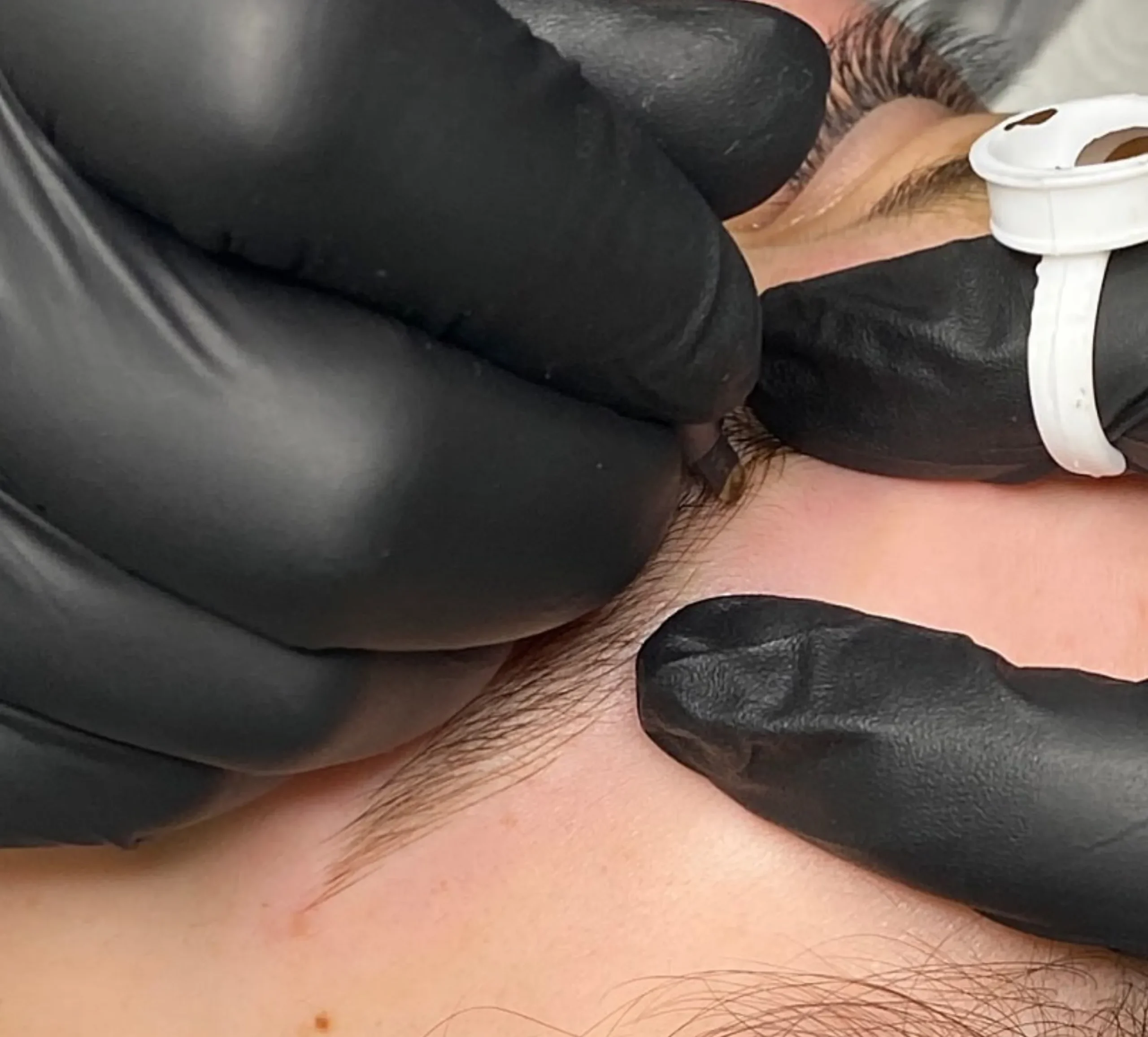
Online training is like a kind of starter kit for your brain – it’s good for getting started.
It’s super useful for:
- Getting to grips with the basics of mapping
- Studying colour theory without getting bored
- Figuring out different hair-stroke patterns
- Watching experienced artists in action
- Preparing for your in-person course (because it’s way more effective in person)
- Learning about business basics – you’ll need those eventually
- Practising your latex technique before you mess with live models
- Getting your hand movements and angles just right
But don’t think for a second that it replaces the in-person bits – that’s just not possible.
Some online course providers like to claim they’re “government compliant”, but – let’s face it – the government doesn’t actually regulate the running of cosmetic tattoo training courses. Infection control is the only thing that’s regulated. Which is why loads of students use online theory as a starting point before signing up for a structured course like our microblading brow course by Cosmetic Tattoo Melbourne, where the theory you’ve learned online gets reinforced with proper practice on live models.
Eyebrow Tattoo Courses: Costs in Australia

Prices vary, but here’s a realistic Melbourne-based snapshot:
| Training Type | Average Cost | Notes |
|---|---|---|
| Online theory course | $300–$1,500 AUD | Great prep, not enough on its own |
| Infection-control certificate | $200–$550 AUD | Mandatory and must be assessed in person |
| Full microblading course with models | $2,000–$5,500 AUD | Includes in-person techniques + supervised work |
| Starter kit | $300–$800 AUD | Blades, pigments, tools, and latex |
A 2024 Training Industry Survey found that 72% of confident cosmetic tattoo artists who made it through their first year had done at least two types of training: some bookwork and some hands-on work.
It’s the combo that works – and that’s exactly what Melbourne’s patients are used to having.
FAQ
Can I legally work as a cosmetic tattooist with only online learning?
No way – you need to get a solid grounding in things like HLTINF005 and actually work on real people in a training setting.
Does online learning count toward my training?
Yeah, well, it’s useful for getting your head around the theory – but it’s no substitute for getting some proper hands-on training.
Do councils check my training certificates?
Well, yeah, they do – before they’ll even consider approving your workspace, they may well ask to see proof of your training.
Will insurance cover me if I do only online training?
No – actually, they specifically say no, because they only give a tick if you’ve done some proper hands-on training with a registered training organisation.
Can I work on friends at home after an online training course?
No – with all due respect, that’s not safe – and, from a legal point of view, it’s also a non-starter: you need to actually go and get some proper training first.